

Beginner piano learners find PDF books a convenient, affordable starting point. Apps like Simply Piano aid initial progress, but dedicated resources are vital.
What is a Piano Book PDF?
A Piano Book PDF is a digital version of a traditional piano instruction book, offering lessons, exercises, and musical pieces in a portable document format. These resources often mirror established methods like “Alfred’s Basic Adult Piano Course” or “Faber Piano Adventures,” providing structured learning paths. They can range from comprehensive courses covering music theory and technique to collections of simplified songs for immediate playing.
The digital format allows for easy access on various devices – tablets, computers, and smartphones – making practice more flexible. Some PDFs even include audio files for accompaniment or demonstration, enhancing the learning experience. They represent a cost-effective alternative to physical books, especially for beginners exploring piano education.
Why Choose a PDF Format?
PDFs offer several advantages for beginner piano students. Cost-effectiveness is key; they’re often cheaper than physical copies. Portability allows learning anywhere with a tablet or smartphone, supplementing apps like Simply Piano. Accessibility features, such as zooming and text-to-speech, benefit diverse learners.
Furthermore, PDFs minimize wear and tear, unlike physical books. They’re easily searchable for specific lessons or exercises. Digital backups prevent loss, and printing select pages is convenient. While a MIDI keyboard enhances practice, a PDF provides foundational instruction without immediate hardware investment.

Essential Piano Concepts for Beginners
Beginners must grasp keyboard layout, music reading (notes, staff, clefs), and basic theory—rhythm and time signatures—to effectively utilize PDF piano resources.
Understanding the Piano Keyboard
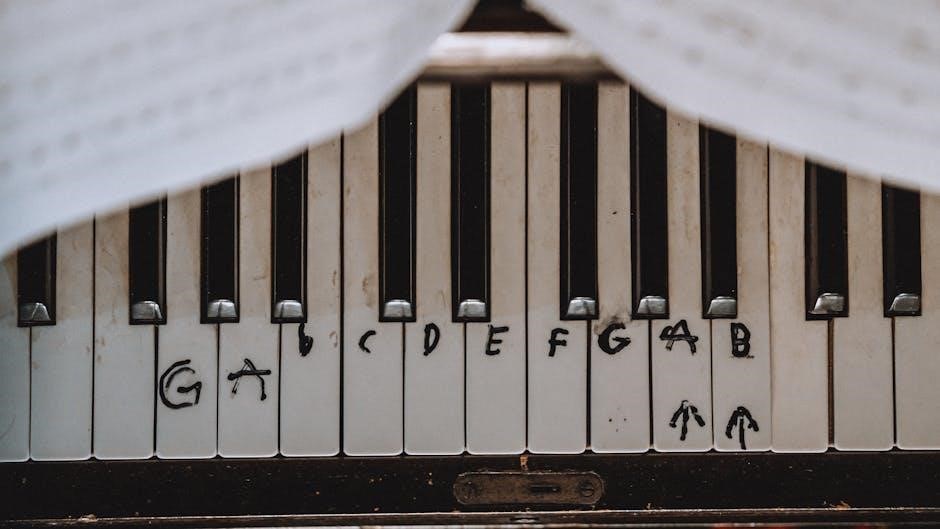
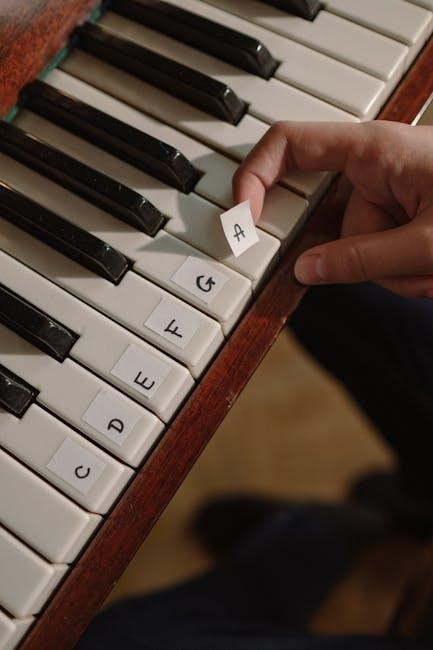
Beginners often feel overwhelmed by the piano’s 88 keys! A PDF book will visually map the keyboard, illustrating repeating patterns of white and black keys. Recognize the groups of two and three black keys – these are your landmarks.
White keys represent the natural notes (A, B, C, D, E, F, G), while black keys are sharps and flats. Understanding this arrangement is crucial before attempting any lesson within a PDF. Practice identifying notes without looking, building muscle memory. Many beginner books start with middle C, a central reference point for learning.
Reading Music: Notes, Staff, and Clefs
A core skill for any pianist is deciphering musical notation. PDF piano books introduce the staff – five horizontal lines and four spaces where notes reside. Each line and space represents a specific pitch. Learning the treble and bass clefs is essential; the treble clef (higher notes, typically right hand) and bass clef (lower notes, typically left hand).
Beginner PDFs will often include mnemonics to remember note names (e.g., Every Good Boy Does Fine for the lines of the treble clef). Consistent practice reading notes within a PDF is key to fluency.
Basic Music Theory: Rhythm and Time Signatures
Understanding rhythm is crucial alongside note reading. PDF piano books for beginners explain note values – whole, half, quarter, eighth, and sixteenth notes – and their corresponding durations. Time signatures, like 4/4, indicate how many beats are in each measure and what note value receives one beat.
Practicing with a metronome (easily accessible online) alongside your PDF is highly recommended. This builds internal timing and accuracy. Grasping these fundamentals unlocks the ability to play music with consistent tempo and feel.
Top Piano Book PDFs for Beginners
PDF versions of “Alfred’s,” “Faber,” and “Thompson’s” courses are popular choices. These resources offer structured lessons for beginner piano students.
“Alfred’s Basic Adult Piano Course” ─ A Comprehensive Approach
Alfred’s Basic Adult Piano Course is widely recognized for its thoroughness, making it an excellent choice for beginner adults. The PDF format allows for convenient access and portability, enabling practice anywhere. This method systematically introduces music theory, technique, and repertoire.
It progresses at a manageable pace, building a solid foundation. Many users appreciate its clear explanations and gradual introduction of concepts. While some may prefer more contemporary song selections, the core skills taught are universally applicable. The course often includes supplementary materials, enhancing the learning experience. It’s a robust option for self-study or alongside a teacher.
“Faber Piano Adventures” ‒ A Popular Choice for All Ages
Faber Piano Adventures stands out as a highly popular method, suitable for learners of all ages, including beginners. The PDF versions offer flexibility and accessibility. This series emphasizes a well-rounded musical experience, integrating technique, artistry, and theory. It’s known for its engaging approach and colorful illustrations, making learning enjoyable.
The method progresses through levels, building skills incrementally. Many appreciate the inclusion of duets and varied repertoire. While some may find the pace slightly slower, it ensures a strong grasp of fundamentals. It’s a great choice for those seeking a comprehensive and motivating learning path, often used in conjunction with a teacher.
“John Thompson’s Modern Course for the Piano” ─ A Classic Method
John Thompson’s Modern Course for the Piano remains a time-tested and respected method for beginners. Available in PDF format, it provides a structured approach to piano learning. This classic series focuses heavily on technical development and reading skills, building a solid foundation. It’s known for its systematic progression and clear explanations.
While some may find it less visually engaging than newer methods, its effectiveness is undeniable. The course emphasizes finger exercises and scales, crucial for developing dexterity. It’s a particularly good choice for students who benefit from a traditional, disciplined learning style, and a strong emphasis on music theory.
Utilizing Piano Book PDFs Effectively
PDF piano books thrive with consistent practice! Set achievable goals, incorporate finger exercises, and learn basic chords to maximize your learning experience.
Setting Realistic Goals and Practice Schedules
Beginners often overestimate initial progress. Start with short, focused practice sessions – 15-30 minutes daily is more effective than infrequent, lengthy ones. Break down complex pieces into smaller, manageable sections. PDF books allow for annotation; mark challenging areas for focused repetition.
Establish weekly goals, like mastering a specific scale or chord progression. Celebrate small victories to maintain motivation. Consistency is key; even a little practice each day builds skill. Avoid overwhelming yourself, and remember that learning piano takes time and dedication. Utilize a calendar to schedule practice, treating it like an important appointment.
The Importance of Finger Exercises and Scales
Finger exercises and scales are foundational for beginner pianists. They build strength, dexterity, and independence in each finger. Many PDF piano books include dedicated sections for these exercises; prioritize them! Start slowly, focusing on evenness and accuracy, rather than speed.
Scales familiarize you with key signatures and finger patterns. Consistent practice improves muscle memory, making more complex pieces easier to learn. Don’t skip these seemingly “boring” exercises – they are crucial for developing proper technique and preventing bad habits. Aim for 10-15 minutes of focused finger work daily.
Learning Chords and Chord Progressions
Once comfortable with basic notes, beginner piano students should focus on chords. PDF books often introduce major and minor chords first, explaining their construction. Understanding chord inversions adds versatility. Begin with simple chord progressions – like I-IV-V-I – commonly found in many songs.
Practicing chord changes smoothly is key. Use a metronome to maintain consistent timing. Learning to read chord symbols (e.g., Cmaj7, Dm) unlocks a vast repertoire of songs. Many resources supplement PDF books, like online tutorials demonstrating chord voicings and progressions.
Supplementary Resources for Beginner Piano Players
PDF books benefit from apps like Simply Piano and YouTube tutorials. Metronomes enhance rhythm, while online lessons offer diverse perspectives for beginners.
Online Piano Learning Apps (e.g., Simply Piano)
Beginner piano players often supplement PDF books with interactive apps like Simply Piano. These apps provide real-time feedback on accuracy and rhythm, making practice more engaging. Users report achieving basic proficiency—reading music, playing simple songs, and understanding fundamental concepts—within weeks of consistent use.
However, apps aren’t replacements for structured learning. They excel at gamifying initial steps, but may lack the depth of a comprehensive method book. Combining an app’s interactive elements with the detailed explanations found in a PDF piano course offers a balanced approach. Some users successfully navigate early stages with apps alone, then transition to more formal study.
YouTube Tutorials and Online Lessons
Beginner piano students can greatly benefit from the wealth of free resources on YouTube. Numerous channels offer tutorials covering everything from basic hand position to playing popular songs. These videos can visually demonstrate techniques that might be difficult to grasp solely from a PDF book.
However, quality varies significantly. It’s crucial to seek out reputable instructors and structured playlists. Combining YouTube lessons with a PDF piano course provides a well-rounded learning experience. Videos can clarify concepts, while the book offers detailed exercises and a progressive curriculum. Remember to critically evaluate the information presented and supplement with other resources.
Metronomes and Rhythm Training Tools
Developing a strong sense of rhythm is fundamental for any beginner pianist. A metronome is an invaluable tool for achieving this, helping to internalize consistent timing while working through exercises in your PDF piano book. Start slowly and gradually increase the tempo as accuracy improves.
Beyond traditional metronomes, numerous apps and online tools offer interactive rhythm training. These can include exercises focusing on subdivisions, syncopation, and different time signatures. Consistent practice with these tools, alongside your PDF materials, will build a solid rhythmic foundation essential for musicality and progress.
Understanding Piano Dynamics and Expression (Piano ─ ‘p’ in music)
Beginners learn ‘piano’ (p) signifies softness. Mastering dynamics, guided by your PDF book, adds emotion and nuance to your playing, enhancing musicality.
What Does ‘Piano’ Mean in Musical Terms?
Piano, denoted by the letter ‘p’ in sheet music, is an Italian term directly instructing the performer to play a passage or note softly. Originating from the instrument’s ability to produce both loud and soft sounds – “piano-forte” meaning soft-loud – the dynamic marking indicates a delicate touch.
For beginners utilizing piano book PDFs, understanding this fundamental concept is crucial. It’s not merely about reducing volume; it’s about shaping the musical phrase with sensitivity. Your PDF resources will likely include exercises to develop this control, emphasizing a lighter finger action and nuanced expression. Recognizing ‘p’ allows for a more emotive and musically accurate performance.
Developing Touch and Sensitivity
Beginners often focus on hitting the correct notes, but true musicality lies in developing touch and sensitivity. This involves controlling the force applied to each key, creating varied tones and expressions. Piano book PDFs can guide you through exercises designed to build this crucial skill.
Start slowly, consciously varying your pressure. Imagine playing with different emotions – gentle, playful, or dramatic. Pay attention to the sound produced; a lighter touch yields a softer tone, while greater force creates volume. Consistent practice, guided by your PDF materials, will cultivate a nuanced and expressive playing style.
Troubleshooting Common Beginner Challenges
Beginners struggle with hand position, coordination, and plateaus. Piano book PDFs offer solutions, emphasizing posture and consistent practice for improvement.
Hand Position and Posture
Proper hand position is crucial for beginner pianists utilizing PDF books. Avoid tension; maintain a curved, relaxed hand shape as if holding a ball. Wrists should be flexible, not stiff or locked.
Good posture supports efficient playing. Sit upright on the bench, maintaining a comfortable distance from the piano. Feet should be flat on the floor or a footrest, providing stability.
Many PDF resources demonstrate correct technique. Ignoring these fundamentals can lead to strain and hinder progress. Consistent attention to posture and hand shape builds a solid foundation for future skill development.
Coordination of Both Hands
Beginner piano students often struggle with coordinating both hands, a common challenge addressed in many PDF learning materials. Start slowly, practicing simple exercises where each hand plays a separate part. Gradually increase tempo as comfort grows.
Focus on rhythmic accuracy; use a metronome to maintain a steady beat. Many PDF books include exercises specifically designed to improve hand independence and synchronization.
Don’t rush the process! Consistent, patient practice is key. Breaking down complex passages into smaller sections can also aid coordination. Remember, apps like Simply Piano can help build this skill.
Overcoming Practice Plateaus
Beginner piano learners inevitably encounter practice plateaus – periods where progress seems to stall. Don’t be discouraged! Review fundamental concepts from your PDF book, focusing on areas needing reinforcement.
Introduce new, slightly challenging pieces to reignite motivation. Vary your practice routine; incorporate scales, chords, and sight-reading. Consider exploring different genres to broaden your musical understanding.
Sometimes, a short break can be beneficial. Returning with a fresh perspective often unlocks further progress. Remember, consistent effort, guided by your PDF resources, will eventually yield results.
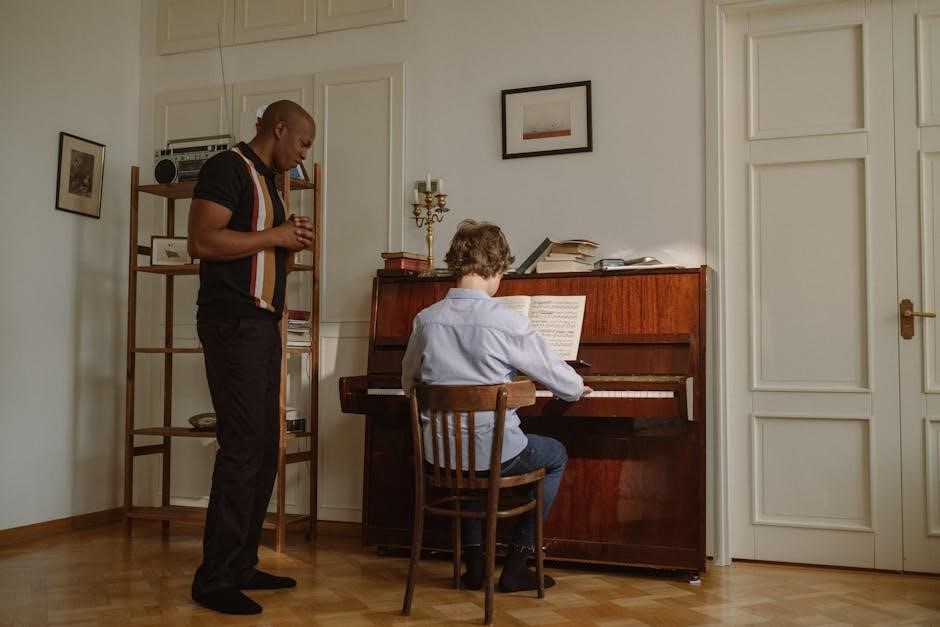
The Role of MIDI Keyboards and Pedals in Learning
MIDI keyboards enhance PDF learning, offering realistic feel and connectivity. A sustain pedal, crucial for expression, mimics acoustic piano functionality.
Benefits of Using a MIDI Keyboard with PDF Books
Combining PDF piano books with a MIDI keyboard significantly elevates the learning experience. Unlike solely relying on a computer keyboard, a MIDI keyboard provides touch sensitivity, mimicking the feel of an acoustic piano. This tactile feedback is crucial for developing proper technique and dynamics.
Furthermore, MIDI keyboards connect directly to learning software, allowing for interactive lessons and real-time feedback. Many PDF resources can be supplemented with apps like Simply Piano, which seamlessly integrate with MIDI input. This creates a more engaging and effective practice environment, accelerating progress for beginners.
Understanding the Sustain Pedal
The sustain pedal, often paired with a MIDI keyboard and PDF learning materials, is a vital component for expressive piano playing. Depressing the pedal lifts the dampers, allowing notes to resonate even after the keys are released, creating a fuller, richer sound.
Beginners often overlook its importance, but mastering the sustain pedal unlocks a new dimension of musicality. PDF books may offer exercises specifically designed to integrate pedal technique. Experimenting with timing and coordination – lifting and pressing the pedal – enhances phrasing and adds depth to performances. It’s a key element for achieving a professional sound.
Progressing Beyond Beginner Level
Beginners can expand skills by exploring diverse genres, advanced techniques, and potentially, formal lessons for personalized guidance and growth.
Exploring Different Genres of Music
Beyond foundational exercises, piano book PDFs can unlock a world of musical styles. Initially focusing on classical pieces builds technique, but venturing into jazz, pop, or blues expands musicality.
Many PDFs offer arrangements catering to various tastes. Consider exploring simplified versions of popular songs alongside traditional repertoire. This approach keeps practice engaging and demonstrates practical application of learned skills.
Experimenting with genres fosters creativity and a deeper understanding of music theory. Don’t limit yourself – the piano is versatile, and diverse exploration accelerates progress!
Learning More Advanced Techniques
As beginners progress, piano book PDFs can introduce more complex techniques. These include arpeggios, trills, and ornamentation, enhancing expressive capabilities. Mastering these requires diligent practice and focused attention to detail.
Look for PDFs that progressively introduce these elements, building upon previously learned skills. Pay close attention to fingering suggestions and practice slowly to ensure accuracy.
Advanced techniques aren’t just about speed; they’re about control and nuance. Combining technical proficiency with musicality elevates performance beyond simple note-playing, unlocking artistic potential.
Considering Piano Lessons with a Teacher
While piano book PDFs offer a solid foundation, supplementing with a teacher provides invaluable personalized guidance. A teacher can correct technique flaws, address individual challenges, and accelerate learning.
They offer real-time feedback, something PDFs cannot. Even short-term lessons can refine posture, hand position, and musical interpretation. Consider a teacher after establishing basic proficiency through self-study.
A skilled instructor tailors lessons to your goals, introducing repertoire and techniques beyond the scope of most beginner books, fostering a deeper musical understanding.

Copyright and Legal Considerations for Piano Book PDFs
Ensure you access PDF materials legally, respecting copyright laws. Utilizing public domain resources or purchasing legitimate copies protects creators and avoids legal issues.
Ensuring Legal Access to PDF Materials
Navigating the world of piano learning PDFs requires careful attention to copyright. Downloading from unofficial sources can lead to legal repercussions and supports unauthorized distribution. Prioritize purchasing PDFs from reputable online music retailers or directly from publishers. Explore options for legally accessing public domain music, which is free to use.
Always verify the source’s legitimacy before downloading any material. Consider subscription services offering legal access to a vast library of sheet music and learning resources. Respecting copyright protects composers, publishers, and ensures the continued creation of valuable learning materials for aspiring pianists.
Respecting Copyright Laws
Understanding copyright is crucial when utilizing piano book PDFs. Copyright protects the intellectual property of composers, arrangers, and publishers. Illegally copying or distributing copyrighted material is a violation of the law and unethical. Always obtain PDFs through legitimate channels, such as authorized retailers or subscriptions.
Sharing purchased PDFs with others is also a copyright infringement. Support the music community by respecting their rights and investing in legal resources. Utilizing legally obtained materials ensures continued access to quality piano learning resources for everyone. Prioritize ethical practices in your musical journey.

Resources for Finding Free and Paid Piano Book PDFs
Online music retailers and public domain websites offer diverse PDF options. Explore legal sources for both free and purchased piano learning materials.
Online Music Retailers
Numerous online music retailers provide a vast selection of piano book PDFs, catering to all skill levels, especially beginners. Websites like Musicnotes.com and Sheet Music Plus offer digital downloads of popular methods such as “Alfred’s Basic Adult Piano Course” and “Faber Piano Adventures.” These platforms often feature previews, allowing you to assess the content before purchasing.
Amazon also hosts a significant collection of digital piano books, frequently offering competitive pricing and convenient access. Remember to check licensing terms to ensure you’re acquiring a legally authorized copy. Many retailers also provide bundled packages including supplementary audio files or access to online learning resources, enhancing the learning experience.
Public Domain Music Websites
For budget-conscious beginners, public domain music websites offer a treasure trove of free piano book PDFs. The International Music Score Library Project (IMSLP) is a prime resource, hosting scanned copies of classic piano methods like “John Thompson’s Modern Course for the Piano” – now free from copyright restrictions.
Project Gutenberg also features a selection of older piano instructional materials. While the quality of scans may vary, these sites provide legal access to valuable learning resources. Be mindful of the age of the material; pedagogical approaches may differ from modern methods, but the foundational musical concepts remain relevant.